2020-September-29
Did you know? You can share this story using the social media icons on the upper left. Use the hashtag #WeAreCisco. You can also rate or comment on the story below.
Balancing a Tech Career with a Love of Esports
When Eileen Bell joined Cisco in January, not only did she bring years of corporate experience with companies like BT and Westpac, but also a degree of celebrity status.
As Australia’s first female professional esports player, Eileen is a trailblazer in the esports world. She has been featured in several publications (including Vogue and PwC).
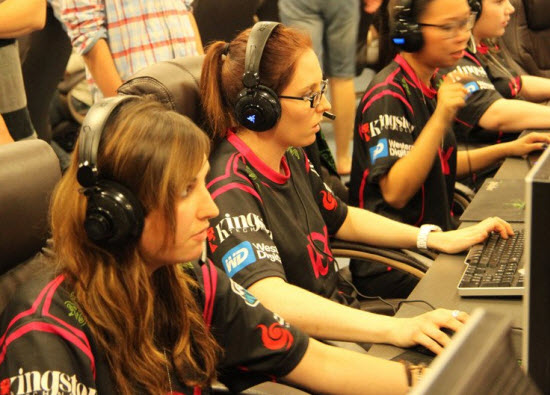
Born and raised in Sydney, she started gaming at age three. Since then, the field of esports — where players compete in online video games like Counter-Strike, Overwatch, and League of Legends — has blown up. And Cisco is getting in on the gaming action.
In August, we announced a partnership with Riot Games, developers of the world’s top PC video game, League of Legends. Under the partnership, Cisco is the Official Enterprise Networking Partner of LoL Esports, and our technology will power the future of the flourishing esports universe.
We caught up with Eileen in Melbourne to get her thoughts on working at Cisco, being a female gamer in a male-dominated industry, how gaming can influence corporate strategy, and more.
Q: What attracted you to Cisco?
Eileen: I’ve always worked in the technology side of businesses. When I was in banking, for example, I worked in digital transformation. But I was looking for a change outside of financial services.
Cisco is one of the best technology companies in the world and was recently voted the best company to work for in Australia. I'd heard and read great things about the culture, and Cisco’s values fit my own. When you look at where technology is headed, especially with the pandemic and other events, it seemed like the perfect fit.
Q: What do you love about gaming?
Eileen: Everything. It's mentally stimulating, it’s got a story, and it’s quite competitive. It’s a game of skills that combines all different areas of entertainment into one platform, which is highly engaging and social.
It’s a really fun hobby, and I'm fortunate enough to play competitively. I’m quite a big sports player as well, and I think it is technically a sport minus the physical aspects — even though I know some people won’t agree with that.
Q: What sort of sports are you into?
Eileen: Growing up in Sydney, I was a beach girl and into surfing. In school, I played tennis and hockey — everything you could think of. Many of the reflexes and skills used in regular sports are similar to those you use in esports, and there's a huge strategy piece to it as well.
Depending on what you play, you definitely have to have extremely high-level reflexes. There’s also the teamwork aspect, and it's highly competitive. So it has all those core components.
Q: In your 2018 interview in Vogue, you mentioned the “gaming glass ceiling.” Can you talk about that?
Eileen: One cool thing about esports is that it brings together diversity. You can be male or female. It doesn't matter what age you are or where you are geographically. And you're not limited to a particular type of esport because your skills diversify across the whole gaming portfolio. That's a key differentiator from physical sports.
But while there’s this democratization on the casual gaming level, the top league seems to be largely male-dominated. I don't think it's necessarily a skills gap there. It’s more to do with males playing with their male friends, and so the whole thing gets skewed that way.
That said, we’re seeing the diversification of esports and gaming generally. With that, we're seeing more and more females play. So it's a game of catch-up, just like it was with financial services, which used to be very male-dominated back in the day. I think it's just a matter of time before we'll see more females in the top leagues.

Q: What are some highlights of your gaming career?
Eileen: The first time I played in the first-ever global esports league (the Championship Gaming Series, or CGS) was in 2008. It took place in a purpose-built stadium in Wuhan, China, and I was the only female drafted into Australia’s first national team.
We were undefeated in the Pan-Asian finals and finished in the top five at the world finals in Los Angeles. I was the first professional female gamer back then, so it was really fun and pioneering. The whole thing was televised worldwide.
Q: Is that when esports really blew up?
Eileen: It kicked off back then, yes, but it didn't take off because of the global financial crisis in 2008. With that, all of the funding dropped off. Also, we didn't have the YouTube streaming platform back then, so gaming wasn’t really connected via the internet, per se.
Today, all of the advertising streams and economic benefits of gaming are through live-streaming video platforms like YouTube’s gaming channel and Twitch. It’s become a multibillion-dollar industry.
Q: Can you talk a little about the importance of Twitch in esports?
Eileen: It allows gamers to stream what they’re doing, and people can watch them and comment. It’s not just limited to the professionals. I think it’s one reason esports draws a lot of people in. In regular sports, fans have their favorite football player or soccer idol or whatever, but they can’t physically talk to them.
But an esports athlete can actually interact with their fans and give tips and so on through these streaming platforms, and fans can also talk to each other. That’s a really key differentiator, and it’s why I think esports is quite popular for the younger kids, too. These platforms also allow revenue streams through brand advertising and through people donating or subscribing.
Q: As someone who works in tech, do you have a career dream where your gaming and business passions mesh?
Eileen: Yes. Playing now is a hobby. In fact, I’m already consulting on gamification and digital strategies. I’ve always been interested in the cognitive side of gaming and how that transfers into general work environments. We're seeing more and more how gaming and gamification can help people with learning and help motivate people.
I’m also interested in esport consulting and looking at how we can benefit and grow the local gaming industry here in Australia.
Q: What does esports mean for corporate strategy and trends?
Eileen: One thing we’re starting to see more and more is traditional sports teams picking up esports, even as we see a drop in general interest in traditional sports from the younger demographic.
Looking to the future, I think eventually these teams won't have the biggest fan base, so they’re diversifying their brand into esports to capture that audience. This impacts brand awareness. And by the way, esports are all year round, not just seasonal, so this changes your advertising as well.

Q: What changes do you expect to see in esports in the coming few years?
Eileen: I think we'll see more of an integration of esports into things like the Super Bowl and other big traditional sports tournaments. And then also, I think the biggest thing will be addressing the network latency issue — the biggest challenge for different geographical locations to play against each other.
In the gaming world, latency is known as “ping” — the speed at which a player can send a command to the game and have its server respond. Low latency — zero to 10 milliseconds (ms) — is crucial for a smooth playing experience. Different lags between countries make it impossible to game with other players around the world.
Once we're able to have zero latency between players around the world, I think we'll see a big increase in tournaments because there will be no more location restrictions. You'll see huge-scale global tournaments, instead of country tournaments, and they’ll happen regularly.
And you can imagine the implications that would have on brand advertising and various things because it just changes the way the digital media will be consumed. Cisco’s recent partnership with Riot Games is part of how we tackle this.
Q: Do you have a message for other women in tech?
Eileen: We all have our passions, and obviously one of the big ones is technology, where many of us have our own little niches. My message would be, if you have a passion, feel it! Use your network, connect with the people around you. Use the technology available and remember that no idea is a bad idea.
Mark your calendar! Catch Cisco during the broadcast of the 2020 League of Legends World Championships from September 25 – October 31, available on Twitch and YouTube.
Related Links
Connect everything. Innovate everywhere. Benefit everyone.
Share your thoughts!
Log in to rate and commentShare your thoughts on the story here!