2020-October-07
Did you know? You can share this story using the social media icons on the upper left. Use the hashtag #WeAreCisco. You can also rate or comment on the story below.
How Jim Got His Groove Back … And Keeps It
BY JIM JOSUPAIT · TECHNICAL SOLUTIONS ARCHITECT · UNITED STATES
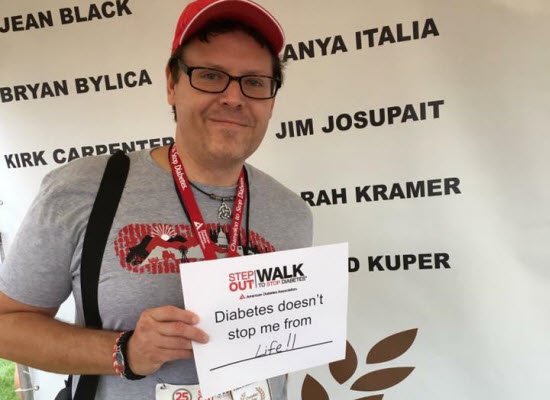
OK, 2020 will go down as a historic year — and for many reasons. For me, I recognize it as my 33-year “diaversary.”
Dia-what, you ask?
Diaversary.
It’s been exactly 33 years since I was diagnosed with type I diabetes (T1D). And, like the previous 32 years, I have a lot to celebrate.
In addition to the advances made in managing T1D, I commemorate conquering the condition through the art of patience, understanding, and hard work each year.
Breaking Down the Disease
What exactly is T1D?
Basically, it’s an autoimmune condition where the body’s pancreas no longer produces insulin. That’s bad. We need insulin to live.
Insulin must be administered to T1D patients through injections or an insulin pump. It becomes necessary for us to constantly monitor blood sugar levels, count carbohydrates, adjust insulin dosages, and exercise regularly.

More Decisions, More Stress
These requirements mean lots of extra daily decisions and responsibilities. Needless to say, it can put a heavy load on your state of mind.
In fact, I recently read that T1D patients must make an additional 300 decisions per day versus someone without diabetes. That’s about 20 extra decisions per waking hour.
And those add up.
Fast.
We’re talking an extra 9,000 decisions per month. That’s more than 100,000 more per year. Remember, this is in addition to the thousands of decisions we all make every day. That added level of stress can have serious consequences on overall mental health.
Because I’ve lived with the condition for so long, you could say today I’m in my “diabetic groove.” I understand what it takes to manage, survive, and thrive while riding the physical and mental rollercoaster of T1D.

Positivity Overcomes Adversity
But it wasn’t always like this. For many years, I struggled with the demands.
Questions constantly raced through my mind: How do I manage so many daily changes in planning, medication, diet, and exercise?
Can I afford the extra costs associated, from medication and testing to supplies?
What if more complications arise down the road?
What happens if low blood sugar recovery is prolonged?
How can I work if my concentration slips when my blood sugar is out of whack?
The key to handling it all? Here’s my advice:
- Stay positive — A positive mindset can do wonders.
- Learn from others — You can always learn things from other people. Whether it’s a yoga teacher, counselor, friend, or your kids, every day is filled with teachable lessons from others.
- See a therapist — Sometimes talking with a professional can help while working through situations. I have been seeing one for the past 10 years. She has provided me with many tools for managing stress.
- Live in the present — Focus on the here and now! Quit worrying about what might happen.
I remind myself to “stay in the moment” at least 100 times per day. It helps me to refocus my energy on what’s happening around me.
To quote famed American cartoonist Bill Keane, “Yesterday's the past, tomorrow's the future, but today is a gift. That’s why it's called the present.”
Related Links
Connect everything. Innovate everywhere. Benefit everyone.
Share your thoughts!
Log in to rate and commentShare your thoughts on the story here!